
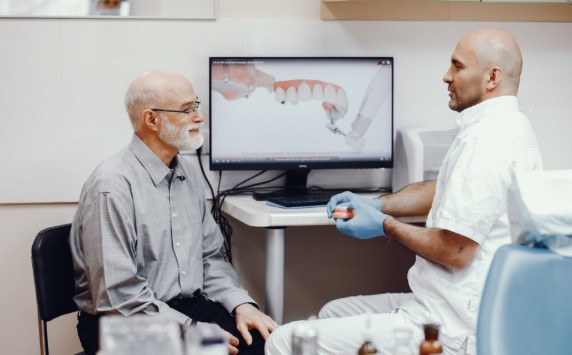

What is a dental implant exactly?
One of the most modern solutions for you if you lose a tooth or several teeth is probably dental implants.
A dental implant actually is a man-made tooth root and it will bond with your bone. The artificial tooth is attached to the artificial root so perfectly that it is almost unrecognizable from a natural tooth visually and functionally.
Why Do We Need a Dental Implant?
There are numerous reasons why a person can lose a tooth: tooth decay, gum disease, accidents, or even old age. The absence of a tooth can spoil your:
Smile and self-esteem.
Ability to eat food properly.
Speech (making some words less intelligible).
Facial contour as the jawbone gradually deteriorates in the absence of a tooth.
In fact, a dental implant serves as a substitute for the absent tooth, and just like a root, it preserves the healthy state of the jawbone. Do you know what a dental implant replacement of a tooth involves?
A dental implant essentially includes: The implant post (root)
A tiny screw much like a post is surgically inserted into the jawbone where the tooth is missing. The implant post is usually made of titanium.
Abutment: A small piece that connects to the implant post and extends a little above the gum line.
Crown The artificial tooth you see is attached to the abutment and has the same color as your other teeth.
After the implant fuses with the bone, the entire assembly becomes very durable and can remain functional for many years if taken care of properly.
Steps of getting a dental implant
Dental implant surgery is usually done in several sessions:
Examination and planning: A dentist will closely examine your teeth, gums, and jawbone through the use of X-rays and/or 3D scans. These will determine if the bone in your mouth is dense enough to support an implant.
Implant placement surgery: A dentist will give you local anesthesia so that you are numb and the procedure is painless. Then, the implant post is slowly inserted in the bone of the jaw. After the placement, the gum is stitched, and the site is waiting for the healing phase.
Healing (osseointegration): In this way, the implant is enclosed and solidly fixed to the bone by the bone growing around it. The duration of this fixation varies from several weeks to months. It is the critical phase to ensure that the implant will last for many years. When the implant has sufficiently healed, another minor surgical procedure is done to place the abutment.
Crown fabrication: The dental person crafts a crown which is not only perfect in fitting the abutment but also resembles a natural tooth. Following its cementation, you can handle the dental implant as if it were a natural tooth. Sometimes, the clinic can even offer you methods for sedation or relaxation in case you are frightened, this being a way to have the experience more enjoyable.
The Benefits of a Dental Implant
There are many advantages to getting dental implants compared to simple dentures or bridges :
Feel just like a natural tooth: You will not feel any movements or slipping with your new teeth when you eat or speak.
Stronger bite: You will find it much easier biting into hard and crunchy foods such as apples, nuts, and meat.
Better speaking: Dentures are often the cause of mumbling and clicking, whereas implants are fixed in the bone so they are very stable.
Encourages the growth of bone: A dental implant work just like a real tooth root and is a helping hand in bone loss prevention.
Extremely durable: If you use good dental hygiene and make regular appointments with your dentist, a dental implant can be very functionally effective for many years and even a lifetime.
Totally natural appearance: It doesn’t have to be difficult to make a crown very similar to the other teeth in color, shape, and size.
Who can get a dental implant?
Generally speaking, dental implants can work for any healthy person who has finished growing and has sufficient jawbone density. However, the dentist will still thoroughly check the patient before deciding. The main factors taken into account are:
You oral health status including your gums and teeth.
Your health in general (for instance, if you are a diabetic or have any bone healing issues, you will likely require special attention).
If the thickness of the bone is insufficient, then the dentist might consider a bone graft, which is a minor operation to introduce more bone so that the implant will be quite secure.
Is a Dental Implant Painful?
People are understandably concerned about the potential pain, but overall, going through dental implant procedure is recognized to be manageable, by most patients, from the pain standpoint. The place of operation is first given an anesthetic injection and generally, only the non-prescription analgesics are adequate after the procedure.
Sometimes, the patients may get a bit of soreness or sensitivity, which lasts only several days, and which is the same as the feeling after the tooth removal. Your dental practitioner will tell you about the oral cleaning and will also recommend the types of food proper for you during the healing time.
Care After Dental Implant
Having a dental implant means you should take care of it just like your natural teeth:
Brushing two times daily for two minutes each time with a soft toothbrush is highly recommended.
Dental floss, or even better interdental brushes, can be utilized to clean in between teeth and around the implant.
Make regular visits to your dentist for checkups and professional cleaning.
With the right care, implant-related infection (peri-implantitis) can be prevented and the implant can remain strong and healthy for a very long time.
When Would You Really Need a Dental Implant?
Dental implants tend to be the perfect solution if you:
Have lost one or multiple teeth and prefer a sturdy, permanent answer to complement your smile.
Do not like partial removable dentures or bridges that tend to shift or may need to be taken out.
Implants are typically great for:
Replacing a single tooth.
Replacing a few missing teeth with implant-supported bridges.
Replacing several or all missing teeth with implant-supported dentures.
Conclusion
Dental implant is definitely one of the smartest and most up-to-date solutions for tooth replacement. Besides giving you a perfect and natural looking smile, it also enhances your chewing and speaking functions and supports your jaw bone preservation. To come to a well-considered decision with regard to whether it is a suitable option for you, getting in touch with a reliable dental clinic is a good idea as they will not only inform you extensively but will also ensure your safety and comfort. The staff at Red House Dental is one the safe and professional implant services providers in Canada known for their work with a gentle touch.